


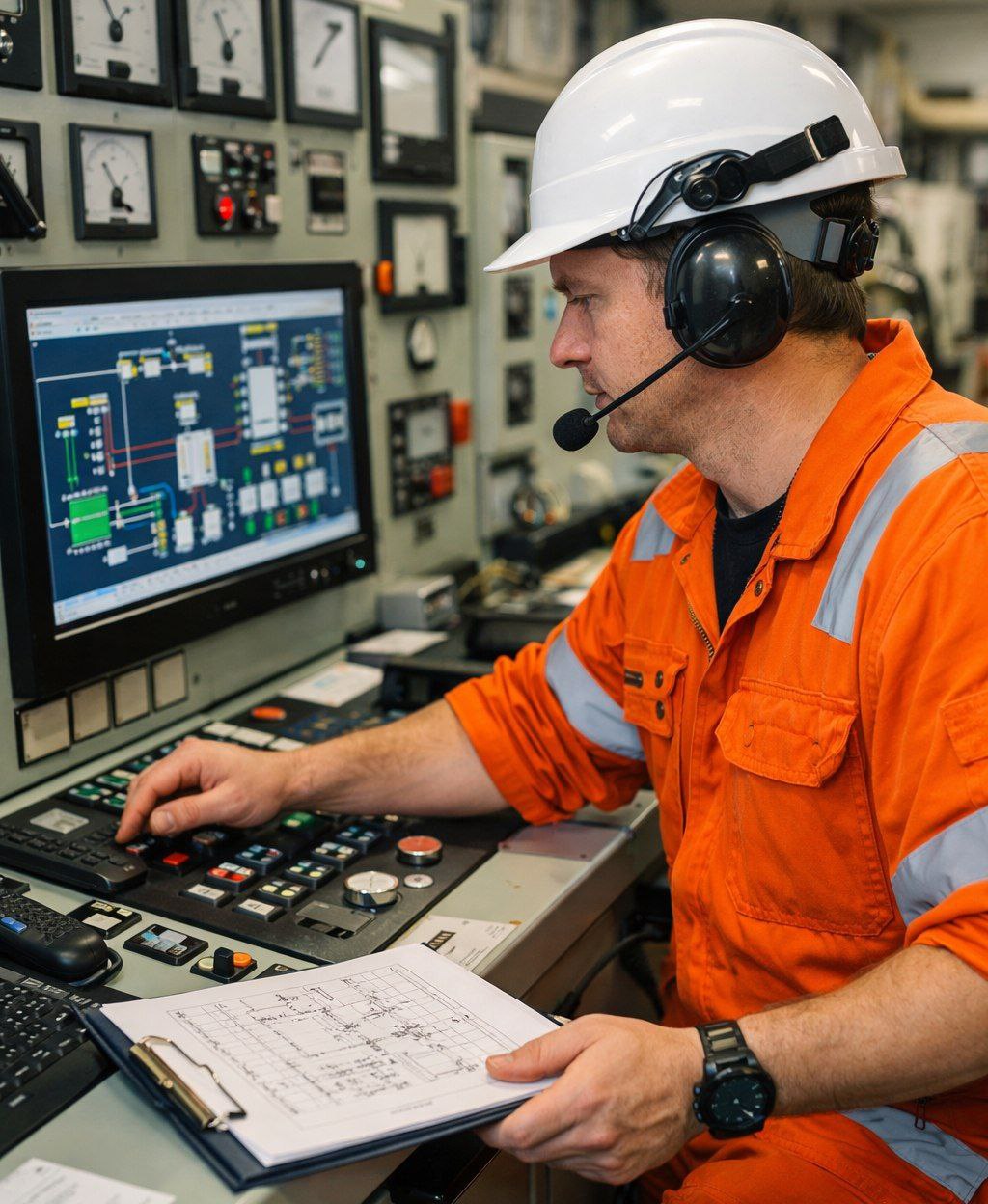
The Role of Electro-Technical Officer (ETO) in Modern Maritime Industry
The Electro-Technical Officer (ETO) plays a critical role in the operation and safety of modern ships. With the rapid advancement of technology in the maritime industry, vessels have become highly dependent on complex electrical, electronic, and automation systems. As a result, the ETO has emerged as an essential member of the ship’s engineering team, responsible for ensuring the reliability and efficiency of these systems. An ETO is primarily responsible for the maintenance, monitoring, troubleshooting, and repair of all electrical and electronic equipment on board a vessel. This includes power generation and distribution systems, automation and control systems, propulsion control, navigation equipment, communication systems, alarms, and safety devices. Unlike traditional marine engineers who focus mainly on mechanical systems, the ETO specializes in electrical and electronic technologies that are vital for modern ship operations. In recent decades, the International Maritime Organization (IMO) and the Standards of Training, Certification, and Watchkeeping (STCW) Convention have formally recognized the importance of the ETO position. The introduction of advanced automation, integrated bridge systems, and digitally controlled engines has made it impossible to operate large commercial vessels safely without qualified electro-technical personnel. The ETO ensures compliance with international regulations and classification society requirements related to electrical safety and system performance. One of the most important responsibilities of an ETO is maintaining operational continuity. Electrical failures at sea can lead to serious consequences, including loss of propulsion, navigation errors, cargo damage, or safety hazards for the crew and the environment. Through preventive maintenance and timely fault diagnosis, the ETO minimizes the risk of system breakdowns and helps ensure smooth and uninterrupted voyages. In addition to technical expertise, an ETO must possess strong problem-solving skills and the ability to work effectively under pressure. Emergencies at sea often require quick decisions and precise actions. The ETO collaborates closely with marine engineers, deck officers, and shore-based technical teams to resolve complex technical issues efficiently. Furthermore, the role of the ETO is evolving as the maritime industry moves toward digitalization, smart ships, and greener technologies. Modern vessels increasingly use energy management systems, hybrid propulsion, alternative fuels, and advanced monitoring software. The ETO is at the forefront of implementing and maintaining these innovations, contributing to improved energy efficiency and reduced environmental impact. In conclusion, the Electro-Technical Officer is a key figure in modern maritime operations. By combining specialized electrical knowledge with practical maritime skills, the ETO ensures the safety, reliability, and technological advancement of ships. As shipping continues to modernize, the demand for skilled and well-trained ETOs will continue to grow, making this profession one of the most important and respected roles in today’s maritime industry.
Website: www.sbb-co.org
Number: 00989365947495
Email address : jobs@sbb-co.org
Comments (0)
Leave a Comment
No comments yet. Be the first to comment!